[
](https://substackcdn.com/image/fetch/$s_!4KyY!,f_auto,q_auto:good,fl_progressive:steep/https%3A%2F%2Fsubstack-post-media.s3.amazonaws.com%2Fpublic%2Fimages%2F8aec723d-6e6d-41ab-996c-4a0febad2b40_1456x816.png)
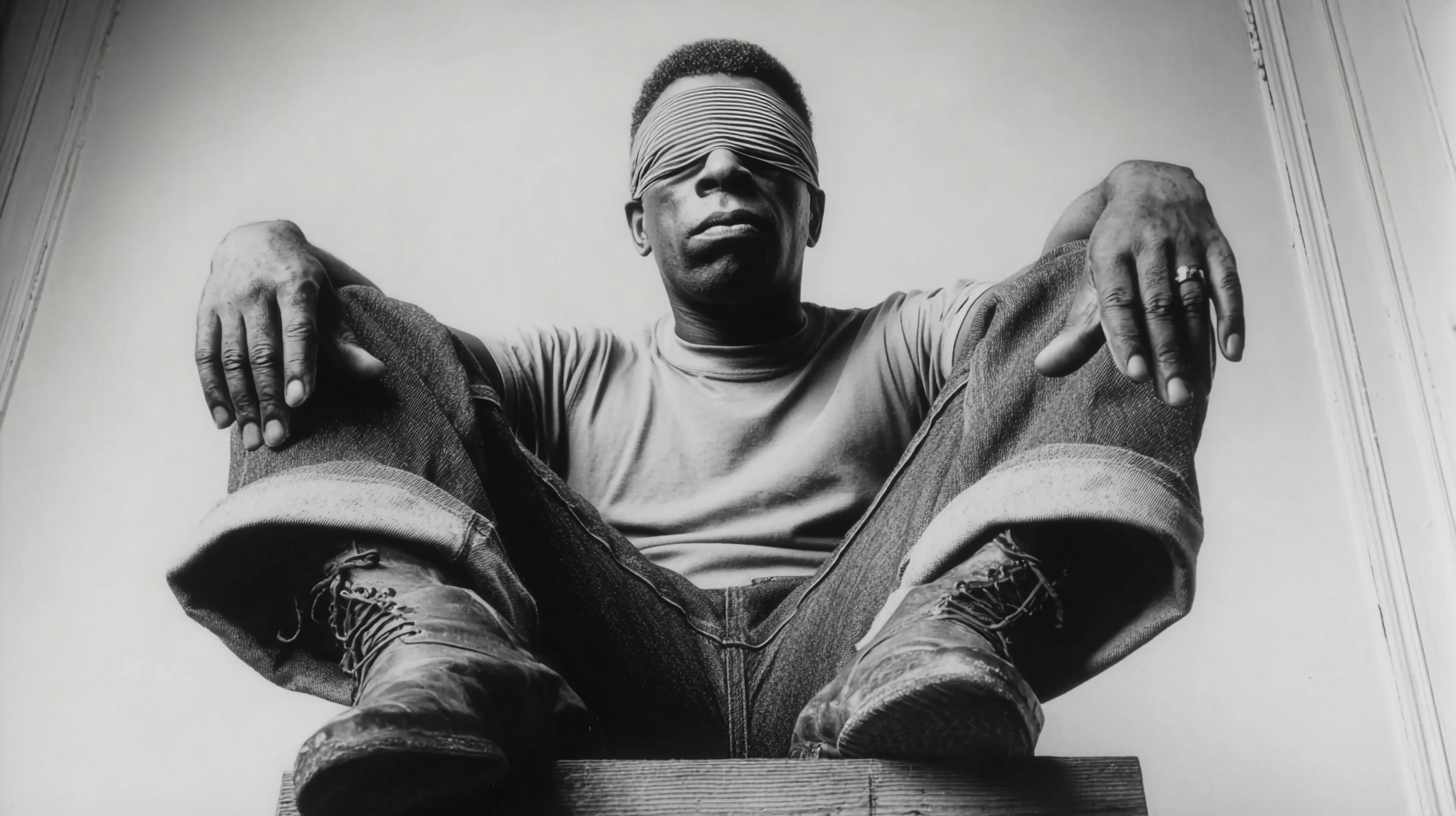
“He said, ‘Go and tell this people: “Be ever hearing, but never understanding; be ever seeing, but never perceiving.” Make the heart of this people calloused; make their ears dull and close their eyes. Otherwise they might see with their eyes, hear with their ears, understand with their hearts, and turn and be healed.”’
- Isaiah 6:9-10
You know the story. August 28, 1963. A quarter-million people at the Lincoln Memorial. Martin Luther King’s dream echoing across the National Mall. The Civil Rights Act passed the following year. The Voting Rights Act the year after that. Victory.
Except.
James Baldwin was in Chicago that same year, in the O’Hare Airport bar. Three Black men, all well past thirty, trying to get served. The bartender refused. Too young, he claimed. It took a vast amount of patience not to strangle him, Baldwin wrote later. It took great insistence and luck to get the manager. The bar was crowded. The altercation was noisy.
Not one customer helped.
Baldwin captured the moment with surgical precision: “When it was over, and the three of us stood at the bar trembling with rage and frustration, and drinking-and trapped, now, in the airport, for we had deliberately come early in order to have a few drinks and to eat-a young white man standing near us asked if we were students.”
The young man wanted to talk. One of Baldwin’s companions, a Korean War veteran, told him that the fight they’d been having was his fight too.
The young man’s response: “I lost my conscience a long time ago.”
Then he walked out.
Here is what the data reveals about that moment, about that entire movement, about why James Baldwin could stand at a bar in 1963-the same year as the March on Washington-and still be refused service while a crowded room of white Americans looked away:
The Civil Rights Movement never came close to the threshold required for systemic transformation.
Not even close.
The Mathematics of Looking Away
In 2013, Harvard political scientist Erica Chenoweth published findings that would reshape how we understand social change. After analyzing 323 resistance campaigns from 1900 to 2006, she identified a threshold:3.5% of the population actively participating in sustained nonviolent resistance.
Every campaign that crossed this line succeeded. Every single one.
The math is simple. In 1963, the United States had 189 million people. To reach the threshold: 6.6 million Americans needed to actively participate in peak mobilization.
The March on Washington drew 250,000.
That’s 0.16 percent.
Not 3.5 percent. Not even 1 percent.One-sixth of one percent.
You might object: What about all the other actions? The sit-ins, the Freedom Rides, the boycotts, the voter registration drives across the South?
Count them all. Every single participant in every single action across the entire decade. Assume aggressive overlap to avoid double-counting. The most generous scholarly estimates put total active participation at roughly 1-2 million people over the course of the movement.
Still only 0.5 to 1 percent.
The Civil Rights Movement, for all its moral clarity and tactical brilliance, for all its courage and sacrifice, never approached the numerical threshold that research shows is required to force comprehensive transformation rather than elite concessions.
And there’s a reason why.
The Ceiling
Black Americans in 1963 comprised 10.7% of the population. Twenty million people.
If every single Black American had marched-every elder, every child, every person too afraid or too exhausted or too broken by the daily violence of Jim Crow-they would have represented 10.7% of the country.
Still three times the threshold needed.
Except they couldn’t all march. No movement has ever mobilized 100% of its affected population. The highest estimates suggest that perhaps 30-40% of Black Americans participated in some form of civil rights activity during the peak years.
Do the math: 40% of 10.7% equals 4.3% of the total population.
Which means that even with extraordinary mobilization of the Black community, the movement could theoretically have crossed the 3.5% threshold.
But here’s what the historical record shows: White participation in boots-on-the-ground activism averaged less than 10%.
At the March on Washington-the most integrated major event of the movement-white participants made up roughly 20% of the crowd. That means 50,000 white Americans out of a white population exceeding 160 million.
That’s 0.03%.
The ceiling wasn’t a failure of Black organizing. The ceiling was white eyes that wouldn’t see.
What Might Have Been
Imagine a different number.
Imagine that instead of 50,000 white Americans at the March on Washington, there had been 5 million. Just 3% of the white population. Not a majority. Not even close to a majority. Just 3% willing to show up.
The total crowd would have been 5.2 million. In a nation of 189 million, that’s 2.7%-still short of the threshold, but within striking distance.
Now imagine that another 2 million participated in coordinated strikes, boycotts, and economic withdrawal that same month. Not marching in Washington. Not risking arrest. Just refusing to cooperate with businesses that discriminated. Just not looking away.
Seven million people. 3.7%.
Above the threshold.
This is not speculation about what such mobilization would have achieved. We have data. We know what happens when movements cross 3.5%.
They win. Not legislation. Everything.
The Proof: February 22-25, 1986
The Philippines had a dictator. Ferdinand Marcos had ruled for twenty years. Martial law. Torture. Disappeared activists. Fraudulent elections. A military loyal to the regime.
In February 1986, Filipinos took to the streets. They gathered on Epifanio de los Santos Avenue in Manila. They were unarmed. They faced tanks. They brought flowers and rosaries.
Over two million people showed up.
The Philippines population in 1986: 55 million.
2 million out of 55 million equals 3.63%.
Four days later, Marcos fled to Hawaii.
Not four years. Not four months. Four days.
The regime collapsed because the military refused to fire. The police refused orders. The bureaucracy stopped functioning. When 3.63% of the population occupied the streets, the pillars of power defected.
The comparison is instructive:
United States, 1963:
Peak participation: 0.16%
Outcome: Legislation (Civil Rights Act, Voting Rights Act)
System: Reformed but fundamentally preserved
Timeline: Decades of continued struggle
Philippines, 1986:
Peak participation: 3.63%
Outcome: Regime change
System: Complete governmental transformation
Timeline: 4 days
The difference between 0.16% and 3.63% is the difference between laws that changed and a system that fell.
The Question Baldwin Asked
Why didn’t white Americans show up?
Not all of them. Not even most of them. Just 3%.
The polling data from the 1960s provides a partial answer. In 1965, 48% of Americans sided with the Selma demonstrators over the state of Alabama. In 1964, 58% approved of the Civil Rights Act.
Approval. From their couches.
Meanwhile, that same year, 68% wanted “moderate” enforcement. And 78% of white Americans said they would leave their neighborhood if Black families moved in.
They heard. They saw. They approved in theory.
But their eyes wouldn’t truly see. And so they didn’t act.
Baldwin diagnosed this precisely: “A civilization is not destroyed by wicked people. It is not necessary that people be wicked. But only that they be spineless.”
The young man at the O’Hare bar wasn’t evil. He’d lost his conscience, he said. That’s different. That’s easier. You don’t have to hate to look away. You just have to be tired. Busy. Scared. Complicit.
Spineless.
The Mechanism of Concession
When movements stay below the threshold, elites can offer concessions.
The Civil Rights Act was historic. The Voting Rights Act was essential. They were also strategic pressure releases.
President Lyndon Johnson wasn’t forced to sign those bills by existential threat to his government. He signed them because the moral pressure was becoming politically untenable, the violence was becoming internationally embarrassing during the Cold War, and because-crucially-the movement hadn’t reached the size that would threaten the fundamental economic and social structures from which white Americans derived benefit.
At 0.16%, you get laws. At 3.5%, you get revolution.
The system survived the 1960s because the system offered just enough change to satisfy the moral qualms of those who could have participated but didn’t.
Baldwin wrote about this too: “Most of the Negroes I know do not believe that this immense concession would ever have been made if it had not been for the competition of the Cold War, and the fact that Africa was clearly liberating itself.”
The legislation wasn’t transformation. It was the minimum required to prevent transformation.
And it worked. The laws changed. But as Baldwin insisted, nothing changed “in the mind.”
The Unaffected Population Problem
Here’s the structural trap for any minority-led reform movement in a democracy:
If the affected population is less than 3.5% of the total, they cannot reach the threshold alone-no matter how mobilized.
If the affected population is between 3.5% and 20% of the total, they need extraordinary internal mobilization or moderate external coalition.
If the affected population is more than 50%, they can theoretically reach the threshold without any participation from the unaffected-as South Africa demonstrated.
Black Americans in the 1960s were 10.7%. That put them in the middle category. They needed allies.
The allies approved from a distance. They donated. They felt sympathetic. Forty-eight percent sided with Selma demonstrators in polls.
But sympathy isn’t participation. Approval isn’t action.
When the affected population mobilizes at 1% and the unaffected population contributes another 0.16%, you get 1.16%. You get legislation without transformation. You get change “before the law” but not “in the mind.”
And then-this is the cruelest part-the lack of transformation becomes evidence that legislation doesn’t work, which becomes justification for not trying harder next time.
The Entry Point Question
Why didn’t more white Americans participate?
One answer: The movement didn’t offer enough low-risk entry points at scale.
Chenoweth’s research shows that nonviolent movements are typically four times larger than violent ones because nonviolence lowers barriers to entry. The elderly can participate. Children can participate. People with disabilities can participate. People afraid of violence can participate.
But nonviolence is a spectrum. Sitting at a lunch counter in Alabama in 1962 was nonviolent. It was also terrifying. You could be beaten, arrested, killed.
The Montgomery Bus Boycott offers a different model: 50,000 Black residents of Montgomery participated by simply not riding the bus. Still risky-many lost jobs, faced threats-but less immediately dangerous than a sit-in.
The Civil Rights Movement excelled at high-risk nonviolent action. It was less successful at creating scaled, low-risk participation mechanisms for the white majority.
Compare this to Serbia in 2000. The Otpor youth movement explicitly designed actions to recruit ordinary citizens. Street theater in shopping centers. Symbolic gestures. Economic boycotts of regime-connected businesses. Ways to participate without facing tanks.
This allowed the movement to grow from thousands to hundreds of thousands to the critical mass-over 500,000 in a country of 7.5 million-that paralyzed Milošević’s government.
The Philippines did something similar. Cardinal Sin, the Archbishop of Manila, called on citizens via Radio Veritas to come to EDSA Avenue. Bring food, he said. Bring rosaries. Bring yourselves. Make it safe for the soldiers who defect.
Two million came.
Could the Civil Rights Movement have designed more ways for white Americans to participate that didn’t require moving South, risking arrest, or confronting police dogs?
Perhaps. Perhaps not. The Southern system was uniquely violent. The risks were real.
But the counterfactual remains: If 5% of white Americans had found ways to actively participate-boycotts, strikes, coordinated refusal to cooperate with segregation even in the North-the movement would have crossed the threshold.
And everything would have changed.
What Baldwin Saw
Baldwin understood this at the cellular level. Not through statistics-he didn’t have Chenoweth’s data-but through lived experience.
He describes a summer in his fourteenth year when he understood that the whores and pimps and racketeers on the Avenue were “a personal menace.” Not because they were different from him. Because they were produced by the same circumstances.
He looked around and saw the machinery that would crush him unless he found “a gimmick, to lift him out, to start him on his way.”
He found the church. Then he found writing.
But what he kept seeing-what he describes with devastating clarity across everything he wrote-was white Americans refusing to look at the machinery. Refusing to see what it was doing. Refusing to understand that what they didn’t know about Negroes revealed precisely what they didn’t know about themselves.
“The person who distrusts himself has no touchstone for reality,” Baldwin wrote. “Whatever white people do not know about Negroes reveals, precisely and inexorably, what they do not know about themselves.”
This is why the threshold matters. The 3.5% isn’t just about numbers. It’s about consciousness.
When 3.5% of a population actively participates in resistance, it means enough eyes have opened that the remaining 96.5% can no longer look away. The movement becomes unavoidable. Undeniable. It occupies physical space and mental space and moral space until the machinery of oppression becomes visible to everyone.
That’s when the pillars of power defect. Not because they become moral. Because they can finally see.
The Contemporary Question
In 2020, somewhere between 15 and 26 million Americans participated in protests following the murder of George Floyd. In a population of 330 million, that’s 4.5 to 7.8%.
Well above the threshold.
Yet no regime change occurred. No systemic transformation. Some police reforms. Some corporations issuing statements. Continued resistance at every level.
Does this invalidate the 3.5% rule?
Chenoweth herself has noted two complications in recent years:
First, authoritarian learning. Regimes have studied successful movements and developed counter-tactics: surveillance, disinformation, preventive arrests of key organizers, strategic concessions to fracture coalitions.
Second, the importance of sustained, coordinated action toward a unified goal. A movement of 26 million people spread across thousands of cities pursuing various aims without central coordination is different from 2 million people occupying a single avenue demanding a dictator’s removal.
The 2020 protests were massive. They were also diffuse. No single demand. No siege of Washington. No general strike. No sustained occupation that forced daily choice for every American: join this or oppose this.
The system weathered it. Offered concessions. Waited for fatigue.
The question remains: What would have happened if those 26 million had stayed mobilized? If they’d converted protest into strike, occupation into economic paralysis, moral outrage into the systematic withdrawal of cooperation?
We don’t know. They didn’t.
But the threshold tells us what’s possible.
The Isaiah Paradox
Return to the opening verse. God telling Isaiah to make the people’s hearts calloused, their ears dull, their eyes closed.
“Otherwise they might see with their eyes, hear with their ears, understand with their hearts, and turn and be healed.”
The paradox: The instruction to close eyes acknowledges that opening them leads to healing. The capacity exists. The mechanism works. Sight leads to understanding leads to transformation.
The closure is cultivated. Chosen. Maintained.
This is what Baldwin meant by “innocence.” Not a natural state but a willed ignorance. An active not-seeing that requires energy to sustain.
And this is why the threshold matters. When enough people open their eyes-just 3.5%-the energy required to maintain the collective closing becomes unsustainable. The facade cracks. Light gets in.
The healing becomes possible.
The Calculation
Here’s what the numbers say about the Civil Rights Movement’s limitation:
The affected population (Black Americans) comprised 10.7% of the total. They mobilized at roughly 30-40% participation at peak. That’s 3.2-4.3% of the total population-potentially above threshold.
But that mobilization wasn’t concentrated in single peak events. It was distributed across time, geography, tactics. The largest single event reached 0.16%.
Meanwhile, the unaffected population contributed less than 10% of active participants. If even 5% of white Americans had participated-roughly 8 million people-the combined mobilization would have easily exceeded any threshold.
The affected population did everything they could do. They couldn’t do more without the unaffected.
The unaffected population approved, sympathized, agreed.
They didn’t show up.
And so the system offered legislation instead of transformation. Laws instead of justice. Change before the law but not in the mind.
Exactly as Baldwin described.
What the Data Tells Us
The research is clear on what produces transformation versus concession:
**Below 1%:**Regime ignores or violently suppresses **1-2%:**Regime offers symbolic concessions **2-3%:**Regime offers substantive concessions (legislation) **3.5%+:**Regime pillars defect, system transforms
The Civil Rights Movement operated in the 1-2% range, occasionally touching 2-3%. It received concessions proportional to the pressure applied.
This isn’t a criticism of the movement. It’s a description of a structural constraint.
When the affected population is a minority, crossing the threshold requires the unaffected majority to see. To understand. To participate.
When eyes won’t open, thresholds aren’t reached. When thresholds aren’t reached, systems survive.
The Urgent Math
Today, Americans face multiple potential thresholds:
If 11.5 million Americans actively participated in sustained climate action, that’s 3.5% of 330 million.
If 11.5 million Americans actively participated in democracy protection, that’s the threshold.
If 11.5 million Americans actively participated in economic justice organizing, that’s the threshold.
The number isn’t impossible. The 2020 protests proved that 26 million can mobilize when the provocation is sufficient.
The question is conversion: How do you convert momentary outrage into sustained participation? How do you convert social media activism into economic withdrawal? How do you convert individual attendance at a protest into coordinated, disciplined, strategic pressure that forces system-level change?
And most importantly: How do you get the unaffected to participate?
Because here’s what the Civil Rights Movement definitively proved: The affected population can achieve remarkable things. They can maintain moral clarity under brutal repression. They can execute brilliant tactics. They can win significant victories.
But if the unaffected won’t participate-won’t truly see-those victories will be limited to concessions. The system will survive. The transformation won’t come.
The Baldwin Warning
“If we do not now dare everything,” Baldwin wrote in the conclusion toThe Fire Next Time, “the fulfillment of that prophecy, re-created from the Bible in song by a slave, is upon us: God gave Noah the rainbow sign, No more water, the fire next time!”
The rainbow sign was the Civil Rights Act. The Voting Rights Act. The promise that the flood of violence was over. That change had come.
But Baldwin warned: The rainbow doesn’t mean you’re safe. It means you were spared once. By water.
Next time: fire.
The fire is systemic collapse. It’s what happens when pressure builds without transformation. When consciousness doesn’t reach critical mass. When enough eyes don’t open in time.
The Civil Rights Movement bought time. It won essential victories. It changed laws that changed lives.
But it didn’t change the system. It didn’t reach the threshold. And so the pressure continues to build.
The Open Question
The data tells us that a few more open eyes can change everything.
Not a majority. Not even close. Just 3.5%.
In 1963, if 3% of white Americans had actively participated, the threshold would have been crossed. If 5% had participated, it would have been surpassed by a margin that made resistance impossible.
They didn’t. Most had sympathy. Many had approval. Some sent money.
But their eyes didn’t open enough to make them move.
This is the mathematical fact underlying every structural injustice in America: The threshold exists. The path to transformation is visible. The mechanism is proven.
What’s missing isn’t knowledge. It’s not strategy. It’s not moral clarity.
It’s the decision of the unaffected to finally see.
To keep their eyes open even when it’s uncomfortable.
To participate even when it’s risky.
To sustain action even when fatigue sets in.
The young man at the O’Hare bar told Baldwin he’d lost his conscience. Then he walked away.
The movement needed him to stay. Needed him and 8 million others like him to do something more than express sympathy.
They needed eyes that would see.
They didn’t get them.
And so the laws changed, but the system survived.
The Current Moment
You’re reading this in 2026. The question Baldwin asked in 1963 remains unanswered.
The mathematical threshold hasn’t changed. The research is stronger than ever. We know exactly how many people it takes. We know what happens when they show up. We know what happens when they don’t.
The affected populations-whoever they are in your moment, whatever injustice currently operates-can mobilize, organize, sacrifice, and fight.
But they cannot reach 3.5% alone if they’re a minority.
They need you. Not your sympathy. Not your approval. Not your donation.
Your participation. Your risk. Your sustained refusal to look away.
Isaiah’s warning echoes across millennia: Otherwise they might see with their eyes, hear with their ears, understand with their hearts, and turn and be healed.
Otherwise. Conditional. Depends on the seeing.
The data says healing is possible. Transformation is achievable. The threshold is reachable.
But only if enough eyes open.
The question-always the question-is whether yours will be one of them.