A Claim That Cannot Be Wrong Is Not a Claim
The dashboard says the system is robust. What would it look like if it weren't? A TL;DR film from chapter 1 of INFO 7375, Computational Skepticism for AI (Nik Bear Brown, Northeastern University). Liam, in for Bear.
A Claim That Cannot Be Wrong Is Not a Claim
The dashboard says the system is robust. What would it look like if it weren't? A TL;DR film from chapter 1 of INFO 7375, Computational Skepticism for AI (Nik Bear Brown, Northeastern University). Liam, in for Bear.
The point first. A claim counts only if it names the result that would make it false. You'll see each claim drawn as the region of outcomes it forbids. The trap: a claim nothing could refute looks just like one that passed.
Why it matters. Every model you ship or buy arrives with claims like robust, performs well, a success. If a claim forbids nothing, no test can ever catch the model failing. A sepsis model passed every check its builders chose, and still missed roughly two in three septic patients. Write the forbidden result first, and a test can finally say no.
Then the lesson, 3Blue1Brown-style: a concrete case, the natural wrong turn, one representation that makes the answer visible, and the general idea named last.
Series: Claude & Agentic AI Course: INFO 7375 · Computational Skepticism for AI · Chapter 1
Chapters
0:00 What this film is about 0:21 Why you should care 0:40 The question 0:51 Terms in this film 1:08 The tile 1:25 Draw the ban 1:46 Other side 2:06 Count the swans 2:27 What it forbids 2:46 Predict 3:02 Black swan 3:11 Four rows 3:39 Name it 3:56 Payoff 4:15 Verdict 4:39 Your turn
YOUR TURN
Paste this into Claude:
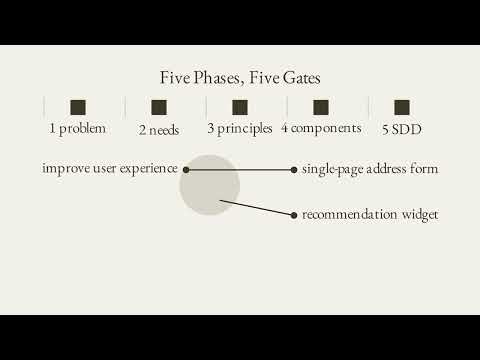
A team reports: "Our model achieves 94% accuracy on the held-out test set." Before anything else, predict: what result would make this claim false, as written? Then rewrite it the Popperian way, naming a metric, a threshold and a measurement window, and draw what it forbids as a shaded region on a number line. Finally, describe one way the model could perform badly that the original sentence would never catch.
What to look for: A metric, a threshold and a window, all named. The forbidden region came before any verdict.
@NikBearBrown
Part of the Claude & Agentic AI series. Every number in this film traces to the chapter or is recomputed from its own inputs; constructed examples are labelled on screen. See the reel's FACTCHECK.md in the open course repository.
▶ The full series playlist — Brutalist https://www.youtube.com/playlist?list=PLG9H-C6rp5RU
What this video covers
- 0:00 — What this film is about
- 0:21 — Why you should care
- 0:40 — The question
- 0:51 — Terms in this film
- 1:08 — The tile
- 1:25 — Draw the ban
- 1:46 — Other side
- 2:06 — Count the swans
- 2:27 — What it forbids
- 2:46 — Predict
- 3:02 — Black swan
- 3:11 — Four rows
- 3:39 — Name it
- 3:56 — Payoff
- 4:15 — Verdict
- 4:39 — Your turn
Transcript
A lightly formatted transcript of the video, with timestamps so you can jump to any section on YouTube.
What this film is about
[0:00] Vanacam, this is Liam in for Bear with chapter one of Info 7375 computational skepticism for AI at Northeastern. This film is about one test for any claim about a model. What result would make it false? A claim counts only if it names that result. You'll see each claim drawn as the outcomes it forbids, the trap. A claim nothing could refute looks on a dashboard just like one that passed. Why should you care? Every model
Why you should care
[0:23] You ship or buy arrives with claims like robust, performs well, a success. If a claim forbids nothing, no test can ever catch the model failing. A sepsis model passed every check its builders chose and still missed roughly two in three septic patients. Write the forbidden result first and a test can finally say no.
The question
[0:40] The question this film is really asking, what result would prove the claim wrong, not right? Results that fit can pile up forever and never finish the job. One result that doesn't fit can.
Terms in this film
[0:51] Four terms you'll hear, a held-out test set, data kept aside during training, used only to test the model. Recall of the real cases, the share the model catches. Precision of the cases the model flags, the share that are real. And out of distribution, inputs unlike the data the model learned from. A dashboard tile says the system is
The tile
[1:09] Robust. Under it an axis, the error rate on unfamiliar inputs from none on the left to a lot on the right. Now let results come in. A low error rate, robust. A middling one, still robust. A terrible one. Nobody wrote down what would count against it, so still robust. So what would non-robust look like?
Draw the ban
[1:25] Rewrite it the way the chapter's table does. Error rate on out of distribution inputs stays below 2% across a 30-day rolling window. Put a mark at 2%. Everything past it is now forbidden, shade it. Replay the same three results. The first fits. The second lands in the shaded part, so does the third. Either one refutes it. The claim can now be wrong, which means it finally says something. Second row, the model
Other side
[1:46] Performs well. The table's rewrite, precision at least 0.91 and recall at least 0.88 on the held-out test set evaluated monthly. Swap the axis to recall, the share of real cases caught. Watch the forbidden region move. Now it is everything below 0.88 on the left. Different claim, different side, same move. The claim is the region it rules out. Now the usual
Count the swans
[2:06] Way to check a model. Take the sepsis early warning model the chapter opens with and count the evidence that it works. Strong internal validation, respectable reported AUC, a risk number on every patient published, cleared through procurement. Each one pushes confidence up. But look at the top of the bar, however many you stack, it never reaches certain. Five white swans do not prove that every swan is white.
What it forbids
[2:27] So stop asking how much evidence the claim has. Ask what it forbids. The model performs well, what recall would count against it? Nothing was written down, so the whole axis is allowed and every check can only confirm. Now borrow the table's row, recall at least 0.88. Everything below it goes dark. That is the claim drawn, the outcomes it rules out. Then a team at the University of
Predict
[2:47] Michigan checked the model against what actually happened to 27,697 hospitalized patients at a health system that had not built it. Before the result lands, commit. Where on this axis does it fall? And what happens to the confidence bar? It caught roughly one in three deep
Black swan
[3:03] Inside the shaded region, and the bar five confirmations falls to nothing. Five white swans, one black one, settled.
Four rows
[3:11] Now the move is quick. Line up the chapter's four claims. Robust becomes error below 2% over 30 days. Performs well becomes precision and recall floors. The migration was a success becomes zero data loss events and 95th percentile latency at most 120 milliseconds 48 hours after cutover. We have mitigated drift becomes PSI on the three highest weight features below 0.10 week over week. Left column, nothing forbidden. Right column, every cell carves a region.
Name it
[3:39] This deserves its name. A claim is falsifiable when it names the observation that would make it false. And notice the asymmetry you just watched. Confirming results pile up without ever reaching certainty. One falsifying result settles it. You can't prove a model works in all cases. You can prove it fails in this one.
Payoff
[3:56] Back to the dashboard, the system is robust. It survived every result because it forbade none. On a dashboard, a claim that survived a real test and a claim that was never at risk look identical. Draw the 2% line and the same results can finally say no, not taught here. Writing that line before you read the output, that part is yours. Let's recap with Claude. A claim counts
Verdict
[4:16] Only in the form that names the result that would make it false. Draw it as the outcomes it forbids. Robust forbids nothing. Error below 2% over 30 days carves a region. Confirmations pile up without certainty. One refutation settles it. The sepsis model's checks were white swans. One external test on 27,000 patients was the black one. And on a dashboard, unrefuted and validated look the same. Your turn. Paste this
Your turn
[4:39] Into Claude. A team reports, "Our model achieves 94% accuracy on the held-out test set." Before anything else, predict what result would make this claim false as written. Then rewrite it the Papirian way naming a metric, a threshold, and a measurement window, and draw what it forbids as a shaded region on a number line. Finally, describe one way the model could perform badly that the original sentence would never catch. Two things to look for. Did it write a threshold and a window, not just accuracy should be high? And did it say what the claim forbids before it said anything about whether the claim is true? A claim that cannot be wrong is not a claim. @nickbearbrown