What the Algorithm Cannot Know It Needs
Algorithms to Live By and the Intelligence No Proof Can Provide
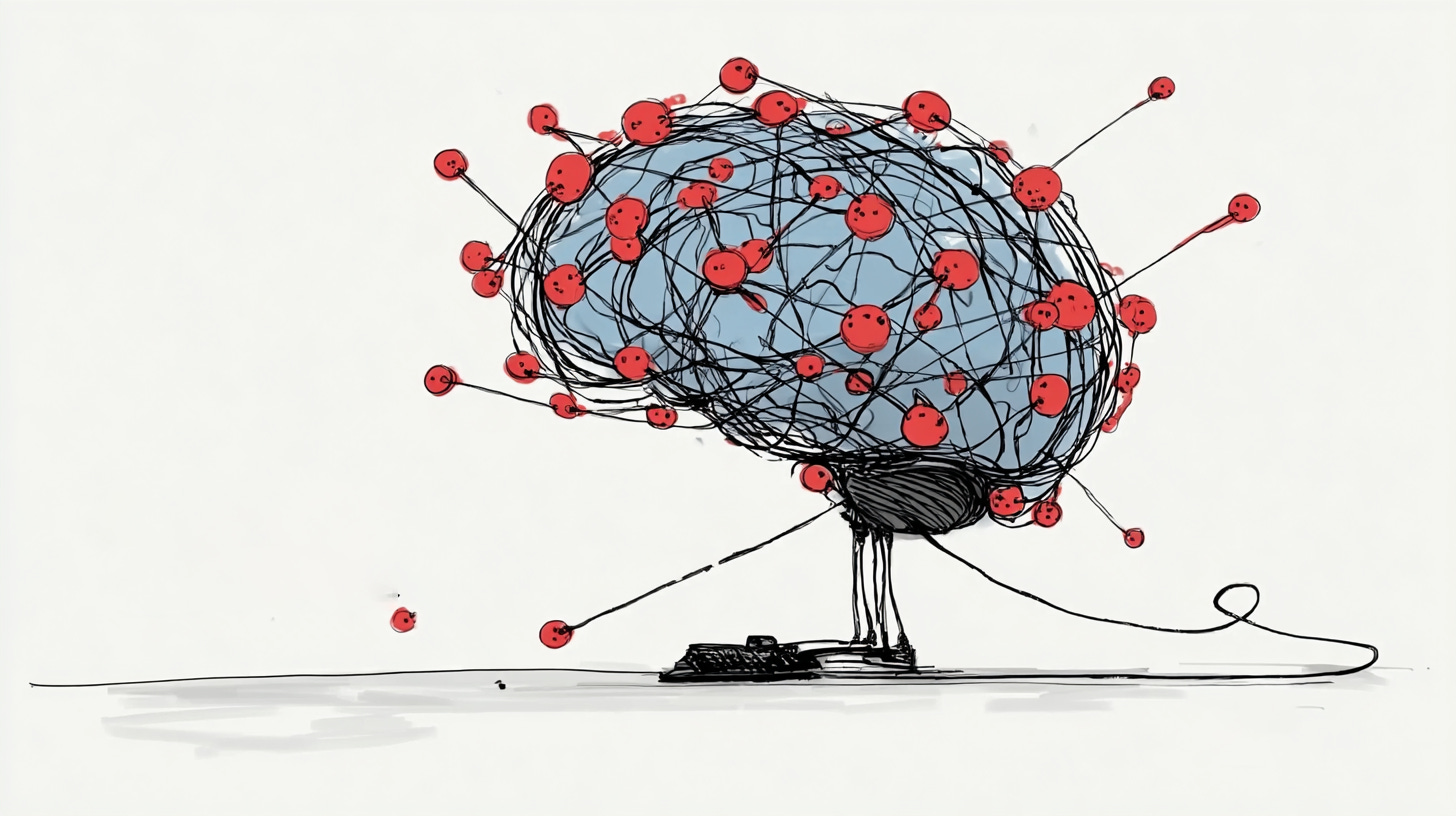
There is a moment in the summer of 1997 when Mars Pathfinder, having traveled 309 million miles at 16,000 miles per hour to become the first rover to navigate another planet’s surface, simply stops working. Not because anything is broken. The scheduler is running exactly as designed, following its priority queue with mechanical fidelity, doing precisely what it was told. What it was told, it turns out, was wrong. A low-priority task has taken possession of a shared resource. A high-priority task is blocked waiting for that resource. The scheduler, loyal to its logic, runs medium-priority work instead. The most important process on Mars starves.
The engineers at JPL call this priority inversion, and they fix it by beaming new code across millions of miles of empty space. The algorithm was not the problem. The failure to see the constraint — to recognize that the task structure had created a dependency the scheduler could not detect — that was the problem. That was a human failure. Specifically, it was a failure of the intelligence that precedes the algorithm: the judgment about whether the conditions that make an algorithm work actually hold.
Brian Christian and Tom Griffiths do not frame Algorithms to Live By as a book about that failure. They frame it as a book about solutions. Eleven of them, proven and elegant, drawn from seventy years of computer science and offered as a toolkit for the intractable friction of human life. When to stop looking for a better apartment. How to balance novelty and habit. What your forgetting curve reveals about your brain’s rationality. The 37% rule, LRU caching, shortest processing time, simulated annealing — the authors present these not as metaphors but as proofs, and they are right to do so. The proofs are real. The algorithms work.
But the book contains another argument, quieter and more unsettling, legible only to a reader who notices what keeps getting left out. Every algorithm in this book requires the human to perform a set of prior operations that no algorithm can perform. And when those operations are skipped — when an institution or a person reaches for the tool without supplying the judgment the tool requires — the consequences range from wasted effort to catastrophe. Algorithms to Live By is, on its surface, a manual for applied computation. Beneath the surface, it is an inadvertent map of the human intelligence that applied computation cannot replace.
The Four Operations
Start with the simplest and most celebrated result in the book. The 37% rule derives from a mathematical structure called the secretary problem: a finite pool of candidates presented sequentially, no recall, no cardinal scores, goal of selecting the best. Look at the first 37% without committing. Then take the first candidate who exceeds everyone seen so far. The proof is clean. The optimal stopping threshold at 37% yields the best candidate 37% of the time, which is the maximum achievable rate given the problem’s constraints. Obama knew it was wrong to use bubble sort. The rule is solid.
What the rule cannot do is tell you whether you are in a secretary problem. That determination requires a human to perform four operations that precede and follow every algorithm in the book, and that no algorithm provides.
The first is recognition. Is this situation actually an instance of this problem’s structure? Is the apartment search genuinely sequential with no recall, or can you call back the landlord from Tuesday? Is the candidate pool finite and estimable, or is it effectively unbounded? Johannes Kepler, hunting for a second wife across eleven courtships, was apparently in a secretary problem until he wasn’t — until he recalled the fifth woman and the algorithm changed. The book notes this variation and adjusts the mathematics. What it does not teach is the act of noticing that the variation has occurred. That noticing is the whole problem.
The second operation is parameter construction. What is N? The 37% rule requires knowing, or reliably estimating, the size of the candidate pool. This value is never given. It must be built from domain knowledge, prior experience, and judgment about what counts as a candidate at all. Michael Trick, the operations researcher who applied the formula to his dating life, made an assumption about his search window — ages 18 to 40 — that converted the problem into something solvable. That assumption was a human contribution, invisible in the proof.
The third operation is assumption auditing. Do the structural conditions that make this algorithm optimal actually hold in this case? The secretary problem assumes ordinal ranking without cardinal information. The full information variant — where candidates have objective scores like percentile rankings — yields a different algorithm entirely. Mistaking one for the other doesn’t just reduce efficiency. It produces the wrong answer with full confidence.
The fourth operation is result interpretation. The algorithm returns a threshold, a probability, an ordering. The human must determine what that output means in the actual context — and, critically, must recognize when the output is not an answer to the question they actually needed answered.
These four operations are not edge cases or advanced applications. They are the entry conditions for every algorithm in the book.
When the Operations Are Skipped
The ECMO trials are the starkest illustration. Extracorporeal membrane oxygenation — routing blood outside the body to oxygenate it mechanically — was an experimental treatment for newborns with respiratory failure. From 1982 to 1984, Bartlett and his colleagues ran a clinical trial using an adaptive algorithm: as the data accumulated, the probability of assigning a patient to the better-performing treatment increased. One infant received conventional treatment and died. Eleven received ECMO and survived. The algorithm was working. The evidence was accumulating. The treatment was updating.
The medical community was unconvinced. Adaptive trials deviated from standard methodology. A second trial was designed, this time splitting patients randomly into equal groups. The results were declared. The cost of that knowledge was 24 more infants in the conventional group who did not survive compared to the ECMO group.
The argument against adaptive trials was methodological — about statistical validity, about reproducibility, about what counts as persuasive evidence in medicine. These are not frivolous concerns. But what the controversy illustrates is the cost of applying a methodological framework — the randomized controlled trial — without auditing whether the assumptions that justify it hold when one treatment is killing people and the other is not. The framework is an algorithm. The auditing is a human operation. When the second trial began, somebody needed to ask: given what we already know, do the conditions that make this procedure valid still apply? Nobody asked. Or if they did, the answer was institutional rather than analytical.
The Pathfinder failure and the ECMO controversy are separated by decades and domains. They share a structure. An algorithm was applied. The preconditions for its correct application were not verified. People paid.
The Prior Problem
Chapter 6 on Bayes’ Rule contains what is arguably the most important single passage in the book, and the book does not know it is there.
The chapter demonstrates, drawing on Tom Griffiths’ own experimental work, that people are remarkably good intuitive Bayesians in domains where they have reliable priors. Given a single data point — a movie’s current gross, a politician’s years in office, a person’s current age — people make predictions that closely match the optimal Bayesian output for that domain’s actual statistical distribution. The human brain, absorbing statistical patterns from lived experience, has apparently learned when to apply a multiplicative rule versus an averaging rule versus an additive one. The research is genuinely beautiful.
Then the book notes, in passing, that people perform poorly on domains where they lack experiential priors — predicting the reign lengths of Egyptian pharaohs, for instance — and that media coverage distorts priors by representing interest rather than frequency. These observations are noted. The prescription is to turn off the news.
What the chapter does not say, and what the evidence demands, is this: a corrupted prior produces a wrong answer with full Bayesian confidence. The machinery runs perfectly. The posterior updates correctly. The prediction is precisely calibrated to the wrong model of the world. And the corruption cannot be detected from inside the calculation. It requires a question the calculation never asks: what process generated the information that built this prior, and is that process representative of the domain I am now trying to predict?
This is a causal question. It requires stepping outside the model and asking about the mechanism that produced the data. It is the question a doctor needs to ask when her clinical intuitions were formed in a patient population systematically different from the one in front of her. It is the question a hiring manager needs to ask when his sense of what success looks like was calibrated on a workforce that excluded most of the people he is now evaluating. It is the question financial institutions did not adequately ask in 2005 about the models pricing mortgage-backed securities — models whose priors were built on a housing market that had never done what it was about to do.
Bayes cannot save you from a bad prior. Only the human capacity to interrogate the origins of belief can do that. The book identifies the disease. It does not name the cure, because naming the cure would require acknowledging that the cure is not algorithmic.
The Wisdom the Book Circles Without Landing
Chapter 7 on overfitting arrives at something Aristotle named twenty-four centuries ago. Complex models fit observed data better but generalize worse. Under conditions of uncertainty, simpler models with earlier stopping outperform elaborate ones. Darwin’s pro and con list resolved not when he had exhaustively enumerated every factor but when the page ran out. Markowitz, who won the Nobel Prize for optimal portfolio theory, invested his own retirement savings 50-50 between stocks and bonds because he did not trust his estimates of the statistical parameters his own model required.
The book frames this as a finding about rationality — sometimes less thinking is more rational than more thinking. The framing is correct. But the harder question, which the chapter approaches and then retreats from, is: when? The prescription is to stop early under conditions of uncertainty. But identifying the conditions of uncertainty, calibrating how early is early enough, deciding when the model you are building has become more responsive to noise than to signal — none of this is algorithmic. It is judgment. Aristotle called it phronesis, practical wisdom, the capacity to know when and how to apply what you know and, equally, when not to.
Early stopping is phronesis formalized for machine learning. The formalization is useful. But the formalization does not transfer the capacity. You can teach a person the concept of early stopping and they will still spend ten hours perfecting a lecture that would have been better at six, still build the nine-factor model when two factors were enough, still keep making arguments past the point where they began to be true. Not because they do not know the principle. Because knowing the principle and having the judgment to apply it in a specific situation are different things, and the difference is not addressable by adding another principle.
What the Book Is Actually Teaching
Read Algorithms to Live By as a prescription — here are eleven tools, apply them — and it is genuinely useful and occasionally brilliant. Read it as an inadvertent proof that every tool requires a toolmaker who cannot be replaced by more tools, and it becomes something rarer.
The book’s deepest contribution is structural. Across eleven chapters, in the gap between each algorithm’s proof and each algorithm’s application, the same four operations appear and disappear: recognize the structure, construct the parameters, audit the assumptions, interpret the result. These operations are not taught in engineering curricula. They do not appear on standardized tests. They are not what most institutions mean when they say they are teaching people to think. And they are the difference between an algorithm that serves its user and an algorithm that runs correctly toward the wrong answer.
Mars Pathfinder eventually got its fix. The engineers were brilliant and the system recovered. The twenty-four infants in the second ECMO trial did not recover. The difference, in both cases, was not computational power. It was whether someone asked — before the algorithm ran — whether the conditions for running it were actually present.
That question is not in the proof. It never is. It is the question the human has to bring.
The book ends with a chapter on computational kindness — the idea that we can reduce cognitive burden on each other by framing problems well, by not forcing unnecessary complexity onto the people we interact with, by being thoughtful about the problems we pose. It is the most human chapter in the book. It is the one that points, without quite arriving, toward what all the preceding chapters have been circling.
The algorithm is not the point. The intent is everything. Knowing when to apply what you know, to whom, and at what cost — that is not computation. That is what computation is for.
Tags: Algorithms to Live By, Brian Christian, Tom Griffiths, human-AI collaboration, pre-algorithmic judgment, computational intelligence limits, phronesis, ECMO clinical trials, Mars Pathfinder, Bayesian prior corruption