Claude, Seeded. — Inside Anthropic's Algorithmic-Art Skill
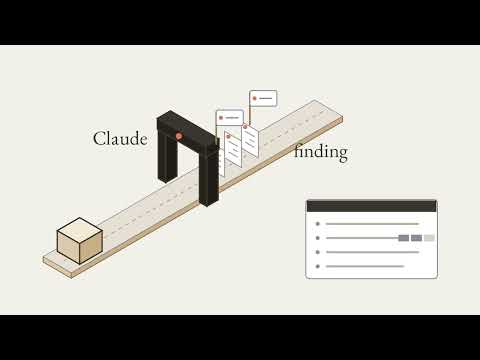
Ask Claude for art, and the first thing it writes is a manifesto. Not the code. Not the artwork. A manifesto for a named generative art movement. Only then does it write the algorithm. That is not a metaphor — it is literally the instruction file.
Ask Claude for art, and the first thing it writes is a manifesto. Not the code. Not the artwork. A manifesto for a named generative art movement. Only then does it write the algorithm. That is not a metaphor — it is literally the instruction file.
Teardown of Anthropic's algorithmic-art skill: the two-phase pipeline (philosophy → code), the Art Blocks reproducibility contract, the fixed viewer chrome vs. the variable algorithm inside, and why the skill repeats certain phrases over and over.
0:00 Cold open — the manifesto comes first 0:17 Act 1 — what a skill actually is 0:45 Act 2 — Organic Turbulence (live flow field, seed 42) 1:12 Act 2 — movement gallery (Quantum Harmonics · Recursive Whispers · Field Dynamics · Stochastic Crystallization) 1:47 Act 3 — the conceptual seed (φ = 1.618 hidden in the parameters) 2:17 Act 4 — the Art Blocks seed pattern (same seed → identical output, forever) 2:38 Act 4 — same plate, different prints (3×3 seed grid) 3:01 Act 4 — fixed chrome, variable algorithm (the artifact viewer) 3:26 Act 5 — the quality dial (repetition steers the register) 4:00 Verdict 4:36 Your turn 5:02 Outro
All generative visuals in this video are live Remotion renders — not screenshots, not stock art. Each is seeded and deterministic: seed 42 → identical output every render.
Built with Remotion 4.x · Kokoro am_onyx voice · Claude fidelity skin. Liam, in for Bear.
Source: Anthropic, algorithmic-art SKILL.md
youtube.com/@NikBearBrown
What this video covers
- 0:00 — Cold open — the manifesto comes first
- 0:17 — Act 1 — what a skill actually is
- 0:45 — Act 2 — Organic Turbulence (live flow field, seed 42)
- 1:12 — Act 2 — movement gallery (Quantum Harmonics · Recursive Whispers · Field Dynamics · Stochastic Crystallization)
- 1:47 — Act 3 — the conceptual seed (φ = 1.618 hidden in the parameters)
- 2:17 — Act 4 — the Art Blocks seed pattern (same seed → identical output, forever)
- 2:38 — Act 4 — same plate, different prints (3×3 seed grid)
- 3:01 — Act 4 — fixed chrome, variable algorithm (the artifact viewer)
- 3:26 — Act 5 — the quality dial (repetition steers the register)
- 4:00 — Verdict
- 4:36 — Your turn
- 5:02 — Outro
Transcript
A lightly formatted transcript of the video, with timestamps so you can jump to any section on YouTube.
Cold open — the manifesto comes first
[0:00] Bonjour, this is Liam in for Bear. Ask Claude for art and the first thing it writes is a manifesto, not the code, not the artwork, a manifesto for a named generative art movement. Only then does it write the algorithm. That is not a metaphor, it is literally the instruction file. Let me show you the strangest, smartest skill Anthropic ships. A skill is a folder of
Act 1 — what a skill actually is
[0:18] Instructions. Claude reads it before it works. This particular folder is called algorithmic art and it rewires the request draw me something into a two-step pipeline. Step one, philosophy. Step two, code. The output is a .md manifesto in a single self-contained HTML artifact running p5.js inline. The terracotta arrow between the two phases is the interesting part. That handoff is where the invention happens. Phase one, Claude writes a brief for phase two Claude. Phase one, Claude must invent a
Act 2 — Organic Turbulence (live flow field, seed 42)
[0:46] Named movement. The skill lists its own examples. Organic turbulence, chaos constrained by natural law, order emerging from disorder. Thousands of particles following vector forces generated by layered Perlin noise. Fast particles brighten toward terracotta, slow ones fade ink shadow. This is running live right now, seeded at 42, deterministic, not a screenshot, not a render of some stock art. This is the kind of system the skill produces, the manifesto made real.
Act 2 — movement gallery (Quantum Harmonics · Recursive Whispers · Field Dynamics · Stochastic Crystallization)
[1:12] The skill lists four other movements. Quantum harmonics, gridded particles with evolving phase, interference building emergent mandalas. Recursive whispers, branching constrained by golden ratios, line weight thinning per recursion level. Field dynamics, particles born at edges, dying at equilibrium, only the traces remain. Stochastic crystallization, random points relaxing into Voronoi cells, random yet inevitable tiling. Each one is a written philosophy before it is a single line of code. The manifesto is a prompt that Claude writes for itself. Phase one, Claude briefs phase two Claude, and that is the whole design.
Act 3 — the conceptual seed (φ = 1.618 hidden in the parameters)
[1:47] Act three of the skill's own pipeline, the conceptual seed. The skill demands a hidden reference, the user's actual subject woven invisibly into the parameters and behaviors. The skill's exact words, think like a jazz musician quoting another song through algorithmic harmony. Only those who know will catch it, but everyone appreciates the generative beauty. In this flow field, the rotation constant is derived from phi 1.618, the golden ratio. It is in the parameters, not on the canvas. Sophistication is not a style choice, it is a design requirement. Phase two,
Act 4 — the Art Blocks seed pattern (same seed → identical output, forever)
[2:18] P5.js in the Art Blocks pattern, random seed and noise seed both set to the same value. Same seed, identical output forever. This is not a coincidence. This is a contract. The parameters must emerge from the philosophy. The skill's exact framing is how to express this philosophy through code, never chosen from a pattern menu. The philosophy writes the spec, the code implements it.
Act 4 — same plate, different prints (3×3 seed grid)
[2:38] The algorithm is the plate, the seed is the print. Here is one algorithm run with nine different seeds. Visibly the same species, visibly different individuals. Same branching pattern, same color logic, same field dynamics, just different starting conditions. And seed 42 tile four, run it again with the same seed, pixel identical. The skill calls this a series of prints from the same plate. That is not a metaphor, that is the deliverable. Artifact viewer your
Act 4 — fixed chrome, variable algorithm (the artifact viewer)
[3:02] Audience sees. Seed navigation, parameter sliders, color controls, action buttons, that sidebar is fixed. Anthropic's, the algorithm inside is free. Brand consistency outside, creative anarchy inside. And while the sidebar holds steady, watch what happens inside. The system swaps. Different movement, different parameters, completely different visual language, same chrome wrapping it. Which is the same law this video runs on. The Claude skin is fixed. The content is yours. The
Act 5 — the quality dial (repetition steers the register)
[3:26] Teardown moment, the skill repeats certain phrases. Meticulously crafted algorithm, the product of deep computational expertise, painstaking optimization, master-level implementation. It says them over and over, not as marketing, but as instructions. Why? Because repetition steers a language model's quality register. This is Anthropic prompting Claude the way power users prompt Claude, with explicit quality standards baked into the instruction file. Honest caveat, framing is not competence. The skill also bans random RGB, demands color harmony, composition, and reproducibility. The algorithm still has to earn it. Let's recap with Claude. The
Verdict
[4:01] Algorithmic art skill is a two-phase pipeline, philosophy first, code second. Phase one, Claude writes a manifesto for a named movement. That document is the prompt for phase two, Claude. Phase two translates the philosophy into P5.js. The Art Blocks seed pattern makes every output reproducible. Same seed, identical output forever. The viewer chrome is fixed by Anthropic. The algorithm inside is free. Brand consistency outside, creative anarchy inside, and the skills quality register is steered by repetition. Explicit standards repeated in the instruction file coach Claude's output toward the level the skill demands.
Your turn
[4:36] Your turn. Here's the prompt. Read it with me. Create algorithmic art about something I love. First, write me the manifesto for new generative art movement, then build it as an interactive sketch, and hide one reference in the algorithm only I would catch. That last clause is the skill working on you. You have to think about what is worth hiding before you even type. That is not a UX feature. That is the philosophy step happening in your own head. Run this in your own Claude session. See what movement it founds. Liam in for bear.
Outro
[5:02] Claude seeded Liam in for bear.