Build a Godot Platformer Without Breaking Its Rules | Assignment 1
Extend a Godot platformer while preserving its movement rules. Walker Claude makes the design and checks visible.
Extend a Godot platformer while preserving its movement rules. Walker Claude makes the design and checks visible.
Follow the character change, Shipping Lane extension, predicted failures, route tests and evidence package. The example separates visual changes from physics changes and uses recorded engine output to check what the player can actually do.
CSYE 7270, Assignment 1: Professor Bear’s worked example.
Your turn Help me plan assignment one in my copy of Walker Jumpman. Read my change brief first. Propose a distinct character and two reachable new jump landings while preserving the original controls and jump. Name two predicted failures and checks. Do not edit until I accept the plan.
Chapters 0:00 Introduction 0:41 Predict Before You Build 2:12 Change The Character, Keep The Contract 3:17 Extend The Route, Not Just The Floor 5:38 Test, Revise, And Explain 7:39 Package The Same Work 10:25 Closing
Sources and credits CSYE 7270 assignment brief; Walker Claude source, design records, test receipts and engine captures. Teaching direction: Nik Bear Brown. AI-assisted implementation, analysis and film production. Liam, in for Bear: synthetic Kokoro narration. Scripted engine input is labeled; no human playtest or learner approval is claimed.
Professor Bear Does His Assignments https://www.youtube.com/playlist?list=PLM51lFDKue_A
What this video covers
- 0:00 — Introduction
- 0:41 — Predict Before You Build
- 2:12 — Change The Character, Keep The Contract
- 3:17 — Extend The Route, Not Just The Floor
- 5:38 — Test, Revise, And Explain
- 7:39 — Package The Same Work
- 10:25 — Closing
Transcript
A lightly formatted transcript of the video, with timestamps so you can jump to any section on YouTube.
Introduction
[0:00] CSY7270 assignment walkthroughs. Assignment one, build walker Claude. Extend jumpman. Test your changes and explain the finished level. Hello, this is Liam in forbear. The shortcut is to ask Claude for game and submit whatever runs. Assignment one asks for something stronger, an extension whose changes you can explain and whose limits you can show. Shipping lane is our worked example. Five terms. A starter is the existing game you extend. A collider is the boundary physics uses. A regression check tests behavior that must survive a change. A fixture is a controlled test setup, not a human play test. A revision identifies the exact source being demonstrated.
Predict Before You Build
[0:41] Here is the working loop. Write the brief. Make one bounded change. Run the game. Inspect what happened and revise from that evidence. Walker is a set of instructions and tools for following that loop. It does not replace your judgment. Your task starts with Walker Jumpman, not an empty project. Change the character meaningfully and add at least two jump landings beyond the original route. Move the finish. Shipping lane goes further, but blocks, bugs, and power-ups are example choices, not extra assignment requirements. Use your own copy or a course authorized repository with a name beginning walker dash. Credit the starter. Import its project file and go do rather than creating an empty project. Use your course cla code access. Paid assets and purchase credits are not required. Before edits, write your character
Concept, the new player decision, the behavior to preserve, and at least two failures with checks. Keep those first predictions. The shipping lane brief predicted hidden camera or label problems, and a raised landing that the unchanged jump might not clear. Ask Claude to read the readme, build report, and change brief, then locate drawing, collider level data, camera, finish, and tests. Require a plan before editing. The assignment supplies that prompt. It is not a shell command. Accept one step. Inspect its diff and run its relevant checks. Run and play the starter before changing it. Save the engine version, source revision, and results. This example retained 25 mechanics checks and nine keyboard checks. Those checks establish a baseline for their cases. Not that every player will understand the route. Inspect the starter drawing
Change The Character, Keep The Contract
[2:13] Before choosing an art pipeline. This version routes drawing into clawed art. Its broad body, arms, eyes, and legs make it recognizable, not merely recolored. The movement function remains separate. A new drawing does not automatically define a new physics body. The existing collider is 18x 28 game units centered 14 units above the origin. Preserve it for the initial art change. Claude's arms extend beyond it so a visible overlap might not mean contact. Inspect that trade-off while facing both ways and while jumping. Check standing, walking, facing left and right, jumping, failure, and completion in the actual game. The separate 18 animation gallery is diagnostic, not 18 abilities. The airborne pose is held so the art does not add a second decorative jump on top of the physical trajectory. Record what must survive. This example keeps speed, jump velocity, gravity, and the collision body. If a new landing is impossible, revise the geometry first. Do not remove collision checks or increase jump strength simply to turn a failed route into a passing report. Read
Extend The Route, Not Just The Floor
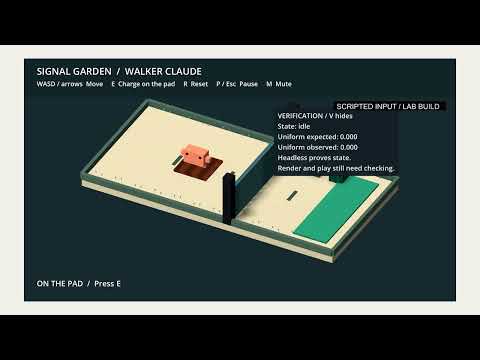
[3:17] First steps and its session code together. Shipping lane keeps the original route and appends new decisions beyond it. Width grows from 960 to 3,200 units and the finish moves to 3112. These are this examples values, not a prescribed student layout. These two platform entries give the first required new landings. The arrays are horizontal position, vertical position, width, and height. Their placement makes a real gap, not a cosmetic floor extension. The route check later verifies actual landings using normal input rather than assuming coordinates prove reachability. Ask what the player must decide here. Crossing a gap and reading a patrol bug happen in the new section. A raised route offers optional tokens. Your assignment can stay smaller. Two meaningful reachable landings beat a long empty
Corridor or a collection of untested features. Now follow the dependencies. The camera clamps against level width so its right boundary moves with the extension. Backgrounds, labels, hazard art, and the finish must agree with the data, too. Inspect the next landing before jumping. A physically reachable platform can still be hidden from the player. The interface needs the same repair. This version computes progress from spawn to the current finish rather than keeping the old fixed distance. Moving only the flag can leave a bar that promises completion too early. checked the source expression against the visible bar on the extended route. One real attempt stalled at horizontal position 2230. A reward block obstructed the raised lane approach. The revision moved block Q053 cells left from cell
138 to 135. Jump strength and collider stayed unchanged. Keep that failed attempt beside the fix. A second inspection found missing question marks and brick markings. The tile layer painted over its own drawing call back. The fix put those marks in the tile atlas. A passing mechanics check had not established visual clarity. Actual engine frames revealed the problem. The example also adds blocks. This source marks a block used before changing its tile or emitting the reward. So repeated head contact cannot pay twice. A powered brick follows the removal branch. This is optional scope. The next shot shows the actual consequence, not a simulated success. The block becomes used. The spark grants a shield. Powered claw breaks a brick, then spends the shield on enemy contact.
Test, Revise, And Explain
[5:38] The original route fixture belongs to the original map. Keep its assertions and run it against that layout. Add a separate full route for shipping lane. That new route checks four landings, the finish, camera, replay, pause, and retry. Green output is meaningful only when you can explain what was checked. Separate controlled fixtures scripted keyboard play and human play. Fixtures isolate edge cases. The route demonstrates a played sequence. You still have to judge readability and feel. This example has machine evidence, but its human play test remains pending. Do not turn an automated run into a fictional student experience. The spike ends this attempt. Claude returns immediately. Pause. Resume manual retry and the menu still use the original controls. Landing from above flattens the bug and bounces Claude. A pit still ends the attempt. The new systems share the same quick recovery. Write the observation, the change it caused, and the retest in your report and frictional log. Our block jump and hidden
Markings are real recorded revisions. Your cycle may concern usability rather than a crash. Retain failures, name uncertainty, and never invent another playtor. Build your explanation around one causal chain. Identify the changed source. Show the resulting action. Then state the check in its limit. A code excerpt followed by actual block behavior does that here. A polished screenshot with no source connection cannot establish the mechanism. For your submission, ask Claude to read the installed god do walkthrough skill with the walker modifier. It is a workflow, not a magical shell command. Show the starter credit changes, new landings, failure and recovery, completion, sourced result, connection, contributions, and revision. Render native 4K, and watch the actual export. Label scripted input, reconstructed prompts, and held frames. Keep gameplay at its original speed. Do not force completion for the camera. Identify human and AI contributions. This example's design, implementation, and captures where AI work under bear's direction that does not certify human playfield or students understanding.
Package The Same Work
[7:39] Your source package includes the game, readme, brief, test report, frictional, and sources, plus film scripts and evidence. Keep credentials and caches out. Keep audio, video, and files over 25 megabytes off GitHub. Put media in the designated storage and verify that reviewers can open it. The readme source zip canvas note and film must identify the same work. Record the game source commit shown in the film and the final submitted commit. A later documentation commit is fine if it leaves that game unchanged. Hash the exact film. Do not silently replace submitted evidence. Run from a fresh copy of the exact source revision without relying on local caches. The example passed its full route from a fresh archive which is local evidence. Remote posting and reviewer access are still separate steps. A working folder does not prove an uploaded repository or film is available. The 60point category
Separates character level verification and film. Character is 15 points level 20 verification 15 and film 10. The film belongs inside that category. It does not replace source or add a fifth category. Show a defensible mechanism, not production polish hiding an incorrect game. 10 points concern the honest frictional log. 10 concern matching accessible versions on GitHub and Canvas. 20 are comparative after the group is reviewed. Meeting the fixed criteria can earn the other 80, not guarantee the comparative 20. Use Canvas for the deadline. The daily late penalty is 10%. Frictional rewards specific attempts, responses, and learning, explicit human and AI contributions, and traceable evidence. A failed attempt can earn full log credit. If it worked immediately, say so and explain your check. Claude may organize your notes. It must not manufacture your experience. Watch the required AI policy film and credit the starter, assets, collaborators,
And tools. Be ready to explain the source, design, checks, and film to the instructor or a TA. The assignment expects Clawed assistance, but the responsibility remains yours. No paid tool or automatic grade follows from using Brutalist. Now watch the end point. Claude crosses the preserved starter in the new shipping lane, then reaches its relocated finish. The following sequence is the existing verified engine take. The example shows a working route, personal play testing, reviewer access, and an actual canvas submission are still yours to complete. This is the actual course driven by scripted keyboard input. The original first steps route still works. Beyond its old finish, Claude crosses four new gaps, reads walking bugs, climbs the raised lane, and reaches the shipping flag. The camera follows the extended bounds. Completion and replay work without collecting every token. This demonstrates a route, not a human judgment about difficulty.
Closing
[10:26] Let's recap with Claude. Predict before edits. Preserve the original brief. Change character and terrain without hiding physics changes. Show real tests, failures, and evidence-based revisions. Submit matching source and film. Own the human judgment. Help me plan assignment one in my copy of Walker Jumpman. Read my change brief first. Propose a distinct character and two reachable new jump landings while preserving the original controls and jump. Name two predicted failures and checks. Do not edit until I accept the plan. Assignment one, builder claude at Nick Bear Brown.
More videos
 6:05
6:05Godot Particle Effects That Communicate Game State | Assignment 6
 5:54
5:54Godot Animation: Inspect Keys, Timing and Interruptions | Assignment 7
 6:41
6:41Teach Game-AI Verification with Three Runnable Exercises | Assignment 9
 3:17
3:17Pitch a Game You Can Actually Show | Assignment 8
 5:01
5:01Write a Game Design Document You Can Check | Assignment 4
 6:56
6:56